Tuesday, November 23, 2010

From Oregon, with love.

We received the follow letter from Dr. Jennifer Gray, an audiologist in Oregon, in regards to a young man who we have worked with since he was a little boy.  When he moved he was very frustrated trying to find an audiologist to go to.  We assisted him in finding one and then we received this letter from her:

Dear Mrs. Johnson,
I just wanted to forward a hello and thanks from Robert H.  He spoke of you fondly and with great respect.  If he could have figured out a way to commute to Ohio, you would still be seeing him.  I am honored to be his replacement audiologist, and according to Robert's reports, I have some pretty big shoes to fill.  I will work at living up to it.  I am enjoying working with him and I am sure he will do well with the new hearing aids.
                                                                                      -Dr. Jennifer Gray

Thursday, November 18, 2010

Is it too loud in here?

You know the thought (go with me here...you should have this thought) - you go somewhere rather loud, and you wonder, "Is it too loud in here?  Should I maybe be wearing ear plugs?"

Well, now we have the solution for you!

The E.A.R Sound Checker - a personal sound level meter!

It's a pocket-sized sound level meter that you can actually wear on your keychain.  Just point the Sound Checker towards the source of a noise, press the button, and the Sound Checker will instantly tell you if sound levels are safe for your ears or dangerous, indicating hearing protection should be worn.

This is an ideal solution to help determine if you should be using ear plugs or muffs while shooting, at concerts, in the military or law enforcement, at sporting events and much more!

The E.A.R. Sound Checker is available in both Silver and Black finishes, and can be purchased in our office for $25.00 plus tax.

Monday, November 15, 2010

Cerumen? What's that all about?

FACTS ABOUT EAR WAX (from our friends at Bionix Medical Technologies)


  • Medically named cerumen.
  • Primary components of cerumen are shed layers of skin, kerative (a family of fibrous structural proteins), saturated and unsaturated long-chain fatty acids, alcohols, squalene, cholesterol.
  • Fear, stress and anxiety result in increased production.
  • There are two distinct genetically determined types of cerumen; wet, which is dominant, and dry, which is recessive.
  • Caucasians and Africans are more likely to have the wet type - honey brown to dark brown and moist.  East Asians and Native Americans are more likely to have the dry type of cerumen - grey and flaky.
  • Cerumen type has been used by anthropologists to track human migratory patterns!

Thursday, November 4, 2010

Resource for Parents

Having a child diagnosed with hearing loss is difficult for any parents.  Where do you turn? What do you do next? Hopefully, you and your child feel comfortable the hands of the team of physicians and Audiologsts who will work together to treat your child's hearing loss.

We found a few websites that are designed to share with those parents who are just starting or even those that are well in to this journey.


Parent to Parent - Resources for Parents of Children with Hearing Loss 
The goal of this site is to empower parents of hard of hearing and/or deaf children by providing the resources necessary for them to make informed decisions about their children’s hearing loss. 


Early Hearing Detection and Intervention
Use this site to look into your states laws for Newborn Hearing Screenings and Early Intervention, as well as learning average developmental milestones for hearing.


IDEA - Individuals with Disabilities Education Act
Federal legislation requiring free and appropriate education in the least restrictive environment to children from birth to age 21. 


Rehabilitation Services Administration (RSA)
The mission of RSA is "to provide leadership and resources to assist state and other agencies in providing vocational rehabilitation(VR), independent living (IL) and other services to individuals with disabilities to maximize their employment, independence and integration into the community and the competitive labor market.”

Tuesday, November 2, 2010

TV EARS

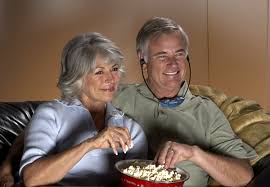
TV EARS is a wireless television headset specifically designed to clarify voices and deliver movie-theater sound without annoying others that are nearby sleeping, reading or even watching the same television program that you are.

The TV EARS transmitter accepts the audio signal from the television and converts that signal into an invisible beam of light called infrared.  This infrared beam is then sent to the TV EARS wireless headseet, which then changes the infrared signal back into crystal clear audio sound.  You maximize your listening enjoyment by adjusting the volume, tone and balance controls located conveniently on the TV EARS headset.  TV EARS lets you customize your audio preferences without affecting the television volume.

You just do the following:

1. Plug the TV EARS transmitter into an electrical outlet
2. Connect one end of the TV EARS audio cord into the back of the TV EARS transmitter, and the other end into the audio out jack located on the back of your television.
3. Installation is finished! Put on the TV EARS headset, adjust the volume, ton and balance, and enjoy listening to your favorite TV programs!

Stop in to our Toledo office for a demonstration of this easy to use TV amplifier!

Thursday, October 28, 2010

Why do hearing aids cost so much?

Q: Why do hearing aids cost so much?


A: Hearing aids, like other custom medical devices such as dentures, artificial limbs and individually manufactured wheel chair seats, are major health issues.  However, hearing aids - unlike many other devices - are typically not covered by insurance, including Medicare.  Consequently, the cost is of major concern when purchasing hearing aids.

The cost typically includes both professional services and the product. The hearing aid itself reflects the research and development needed to produce the ever improving hearing aids of today. There are regulatory costs in the manufacturing of a safe and effective medical device. There are costs to the generous repair and return privileges offered, and there is the cost of shipping impressions and the product.

Another factor in the cost of hearing aids is the number sold, or maybe we should say, the numbers not sold. There are 31 million Americans with hearing loss, but less than 20% of them wear hearing aids.  Hearing aids are this nations most underutilized medical product.

Therefore, the cost of research and development is spread out over fewer hearing aids. If we could convince the vast majority of people with hearing loss that today's hearing aids really do make a difference, the cost of hearing aids would be reduced dramatically.  The untreated hearing impaired population need to know that the cost of not treating hearing loss can be far more devastating in human emotions and relationships than in dollars.

Tuesday, October 26, 2010

Don't You Wish You Could Just Make That Noise STOP?

That uncomfortable ringing is known as Tinnitus.  There are an estimated 50 million Americans who suffer from Tinnitus.  It is highly annoying and difficult to endure.  At Kenwood Hearing Center we have a unique sound therapy tool, ZEN, that may help you manage your Tinnitus.

On November 2 and November 3, a representative from Widex will be presenting a commnity seminar on Tinnitus and its management.

Tuesday November 2 at 11:30 am
     in the Beck Room at the Fulton County Health Center
     Wauseon, OH

Wednesday November 3 at 11:30 am
     at the Pharmacy Counter - 2655 West Central Ave
     Toledo, OH

Call Kenwood Hearing Center today to 
register for our Lunch and Learn!
419-534-3111

Audiologist VS Hearing Aid Specialist/Dealer

Q: What is the difference between an Audiologist and a Hearing Aid Specialist or Hearing Aid Dealer?

A: Many people are confused by these terms, and some hearing aid specialists create new terms such as audioprostologist, to further confuse the public.

According to the Ohio Revised Code 4747.01(B), a Hearing Aid Dealer is defined by the following; "Practice of dealing in" or "fitting of" hearing aids. This means the sale of a hearing aid and the measurement of and testing of human hearing by means of an audiometer or by any other means for the purpose of selecting, adapting and selling a hearing aid to any person and includes the making of impressions for earmolds. According to the Ohio Revised Code, the requirements to become a Hearing Aid Dealer are: you must be 18 years old, of good moral character, free of contagious or infectious disease, have a high school diploma or equivalent and must pass the qualifying test.

The Ohio Revised Code 4753.01(G) defines the practice of Audiology as the planning, directing, supervising and conducting of habilitative or rehabilitative counseling programs for individuals or groups of individuals who have or are suspected of having disorders of hearing; any service in audiology, including prevention, identification, evaluation, consulting, habilitation or rehabilitation, instruction and research; participation in hearing conservation, hearing aid and assistive listening device evaluation, selection, preparation, dispensing, and orientations; fabrication of ear molds; auditory training and speech reading, and administering tests of vestibular function and tests for tinnitus. The educational requirements to become and Audiologist are now a 4-year Doctoral degree in Audiology after completion of a 4 year undergraduate degree.  Audiologists must also pass state licensing boards.

To summarize, the difference between an Audiologist and a Hearing Aid Dealer is education. When choosing a facility to have your hearing tested, ask that all important question, "Do you have Audiologists on staff?" The Audiological staff at Kenwood Hearing Center has called "Dealers" and asked if they have and Audiologist on staff and have been told by several office that they did not, but that the dealers can do the same thing as an Audiologist.  not only is this not true, but it is also illegal for dealer to imply that they are the same as an Audiologist.

Your hearing is your most precious sense, trust it to an Audiologist.
Friday, October 22, 2010

Radiation and Hearing Loss?

Q: Can radiation to the head or neck lead to hearing loss?

A: Radiation is commonly used to treat patients with brain tumors or cancers on the head or neck. Because of the location of the ear, it and all of its components are often in the radiation field. Damage can occur to the outer ear, the ear canal, the ear drum and the space behind the ear drum, the cochlea, the auditory nerve and the auditory pathways.

Radiation induced hearing loss can be conductive, mixed or nerve in nature. A recent report stated that 40% of patients receiving head or neck radiation will experience acute complications to the middle ear system typically resulting in middle ear infection and Eustachian tube dysfunction. I would suggest that you have your hearing evaluated to determine if loss is due to an infection or nerve damage.